Uncategorized

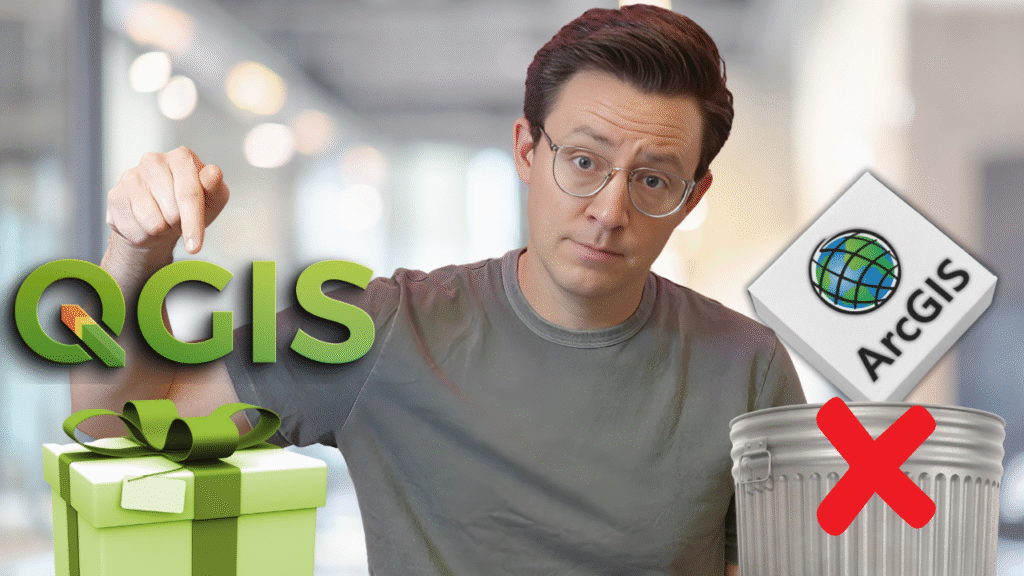
What Is QGIS? The Open-Source Platform Powering Modern GIS

Most GIS professionals start their journey in desktop software. And while much of the spotlight goes to proprietary tools like ArcGIS, there’s another platform that’s open source, incredibly powerful, and central to modern GIS. That tool is QGIS. It’s where many people create their first map, run their first spatial join, and begin bridging the […]
Uncategorized

What Is PostGIS? The Open-Source Spatial Database Powering Modern GIS and AI

For a lot of GIS professionals, SQL and databases feel intimidating. They sound like something meant for backend developers or data engineers, not mapmakers. But here’s the truth, if you’ve ever done a spatial join, buffer, or intersection in ArcGIS or QGIS, you’ve already been writing SQL. You just didn’t see the code behind the […]

Uncategorized

From Leafmap to GeoAI: How Dr. Qiusheng Wu Is Transforming Open Source GIS and Geospatial Education

When most people think of relaxing, they picture a walk, a movie, or a quiet evening. For Dr. Qiusheng Wu, relaxation means writing code. As he puts it, “When I have free time, when I’m relaxing, I’m coding. If you’ve ever used Leafmap, explored GeoAI, or watched one of his tutorials on YouTube, you already […]

SedonaDB vs DuckDB vs PostGIS: Which spatial SQL engine is fastest?

Last week the team from Apache Sedona released SedonaDB, a new tool that makes spatial processing fast and also treats spatial data like a first class citizen. Or read a different way it is really fast for doing spatial analytics. It uses Python and SQL to analyze data and can also output data in GeoParquet […]

Uncategorized

Spatial Data Lakehouse Architecture: Beyond H3 and Vector-Only Data

Storage and formats are the foundation. Pipelines make them practical. But storage and processing architectures determine what’s actually possible at scale. We’ve talked about cloud storage enabling modern geospatial workflows and the formats that make data queryable. We’ve covered the pipelines that get your data into those formats. But there’s a bigger architectural question that […]