
Should You Get a GISP? A Practical, Honest Guide for GIS Professionals
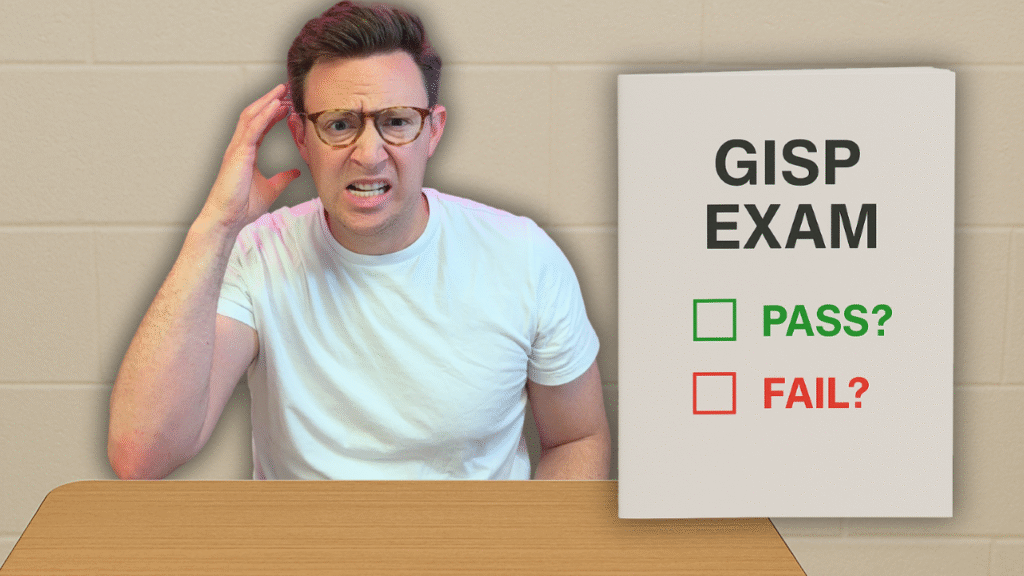
The GISP certification has been part of the GIS landscape for years. It shows up in job descriptions. Professionals debate whether it matters. And at some point, many GIS analysts wonder whether getting a GISP is worth the time, cost, and effort.
I decided to find out by doing something simple. I took the GISP practice exam to see how I would perform and whether the topics it covers truly reflect modern GIS skills. The result reminded me just how broad GIS really is and how much the GISP represents the traditional foundations of the field.
If you are trying to understand whether the GISP will help your career, this article will walk you through everything you need to know.
What the GISP Actually Is
The GISP, or Geographic Information Systems Professional certification, is offered by the GIS Certification Institute (GISCI). It is one of the longest running credentials in the geospatial field. Unlike many certifications, it is not just an exam.
The GISP requires:
- A detailed portfolio of your education, work experience, and community contributions
- A comprehensive exam covering foundational GIS knowledge
- Ongoing continuing education credits to maintain the certification
It is essentially a professional credential designed to validate that you understand the fundamentals of GIS and have contributed meaningfully to the field.
Why People Pursue the GISP
The motivations vary, but they usually fall into a few categories.
1. Career credibility
Many GIS professionals want something that proves their commitment to the field. A GISP can help demonstrate that you have invested in your own development and have earned recognition from a respected organization.
2. Competitive advantage
In government, consulting, and some enterprise environments, certifications are valued because they signal professionalism and consistency.
3. A milestone to mark career progression
Some people simply want acknowledgment after years in the field.
4. Networking and community
Becoming a GISP connects you with a community of credentialed professionals. This can support career growth and professional learning.
But these benefits come with caveats.
The Downsides You Need to Know
The GISP is not universally valued.
There are tradeoffs.
1. Cost
Between the exam fee, portfolio submission, and ongoing maintenance, you are looking at a minimum of five hundred dollars, and often more when study materials are included.
2. Time requirements
Building the portfolio can feel like assembling a college application. It requires documenting years of work, projects, conference participation, and volunteer activities.
3. Limited impact in tech-driven roles
If you want to move into technical GIS, cloud GIS, spatial data engineering, or AI-driven geospatial work, employers tend to prioritize other skills. Python, SQL, cloud certifications, and Esri technical certifications often matter more than the GISP.
4. It does not guarantee a salary increase
While some salary surveys show a modest bump, it is usually correlated with experience rather than the certification itself. The GISP is rarely a direct trigger for a raise.
What It Takes to Apply for the GISP
If you decide to pursue the certification, here is the process.
1. Build a portfolio
You must document:
- Education
- GIS work experience
- Professional contributions (presentations, volunteering, publications)
You must hit a minimum point total across these categories.
2. Take the GISP exam
The GISP exam covers a broad set of GIS topics:
- Projections and coordinate systems
- Raster and vector concepts
- Data management
- Cartography
- Remote sensing
- GPS and geodesy
- Metadata
- Geoprocessing fundamentals
- Basic SQL and database concepts
The exam focuses heavily on traditional GIS knowledge rather than emerging cloud or AI methods.
3. Maintain your certification
Every three years, you must submit documentation of continuing education and contributions.
My Experience Taking the GISP Practice Exam
Taking the practice test was both fun and humbling.
I scored 45 out of 50, or 90 percent. But the questions pulled me into areas I had not touched in years.
The exam mixed:
- Classic GIS theory
- Scenario-based problem solving
- Cartography standards
- Traditional spatial analysis
- Geodesy and datums
- Raster theory
- Topology rules
- Old-school geodatabase workflows
- Basic SQL logic and table joins
Some questions I could reason through. Others required guesswork.
The biggest takeaway was that the GISP exam measures foundational GIS knowledge across a wide and deep spectrum. You cannot rely exclusively on modern tools or cloud workflows. You need a solid conceptual base.
Should You Get a GISP? A Practical Decision Guide
Here is the real question: will the GISP actually help your career?
It depends entirely on your path.
The GISP makes sense if you:
- Work in government, public sector, or consulting
- Want to move into management, project leadership, or enterprise GIS roles
- Need credibility in organizations that value certification
- Have years of experience and want your expertise formally validated
- Want to demonstrate commitment to the traditional core of GIS
- Are applying to jobs where GISP is listed as required or preferred
The GISP is less impactful if you:
- Want to transition into spatial data engineering
- Are focused heavily on cloud, AI, automation, or distributed geospatial technologies
- Work in tech, startups, or private industry that prioritizes hands-on skills
- Need immediate career return on investment
- Are early career and still building your GIS foundations
In modern GIS, practical technical skills often outweigh credentials.
Will the GISP Help You Earn More?
Sometimes, but not always.
Overall, GISP-certified professionals show slightly higher average salaries. But this is likely because people who get the GISP tend to be mid-career or experienced professionals.
The certification itself is rarely the sole factor in salary decisions. Your ability to perform high-value work, automate workflows, build systems, and solve complex problems is what moves your compensation upward.
A More Important Question: What Do You Want Your Career to Look Like?
Certifications are one way to advance. But they are not the only way.
If you want to be a GIS manager or senior analyst inside a government agency or large consulting firm, the GISP will likely help.
If you want to work in spatial data engineering, cloud GIS, AI-driven geospatial analysis, or product-focused tech roles, you will likely get more leverage from skills like:
- Python
- SQL
- Cloud computing
- Data modeling
- Spatial databases
- Automation
- Modern visualization tools
These skills align with where the industry is heading, especially as geospatial integrates with AI and large-scale processing.
Final Thoughts
Taking the GISP practice exam was a reminder of how foundational concepts still matter in GIS. The certification represents the traditional core of the field, and for many professionals, it remains a meaningful milestone.
But whether you pursue it depends on your goals.
If you want a credential that validates your long-term experience and helps you stand out in organizations that value formal certification, the GISP is worth considering.
If you are focused on modern GIS, cloud, data engineering, or AI-driven workflows, you may find more career momentum by investing in technical upskilling and hands-on projects.
Either way, the real value in GIS comes from your ability to solve meaningful problems with spatial data.
If you want help developing those modern skills, I built the Spatial Lab and Modern GIS Accelerator programs to give professionals exactly that foundation. But regardless of your path, understanding your goals is the first step.
